Contents Reconfiguring the Archive The Africa Multiple Cluster of Excellence A network of five centres We build the cluster's data infrastructure Two principles guide how we work We began with WissKI Enter AMIRA The atlas, live A collection from Rhodes, in AMIRA Search & discovery Built on relationality Connections, not records Spatial exploration Entities and their links Where it's hardest Whose subject headings? Building the entities the vocabulary lacks Who has the authority to decide how knowledge is described, and therefore how it is found?
Slide 1
Reimagining the Archive in the Post-Truth Era · Rhodes University, Makhanda · 1 July 2026
Reconfiguring the Archive
Relationality and discovery in the Africa Multiple Interactive Research Atlas (AMIRA)
Frédérick Madore
Data Curator
Africa Multiple Cluster of Excellence
Slide 2
University of Bayreuth · German Excellence Strategy · since 2019
The Africa Multiple Cluster of Excellence
Reconfiguring African studies by confronting power imbalances in how knowledge is produced and shared .
Three working concepts
Multiplicity: relationships before fixed entitiesRelationality: worlds made, unmade, silencedReflexivity: our own positions, and the power behind them
In figures
Known within the cluster as
"Reconfiguring African Studies" — reworking the field's concepts and its structures at once.
Slide 3
About us · Africa Multiple Research Centres (AMRCs)
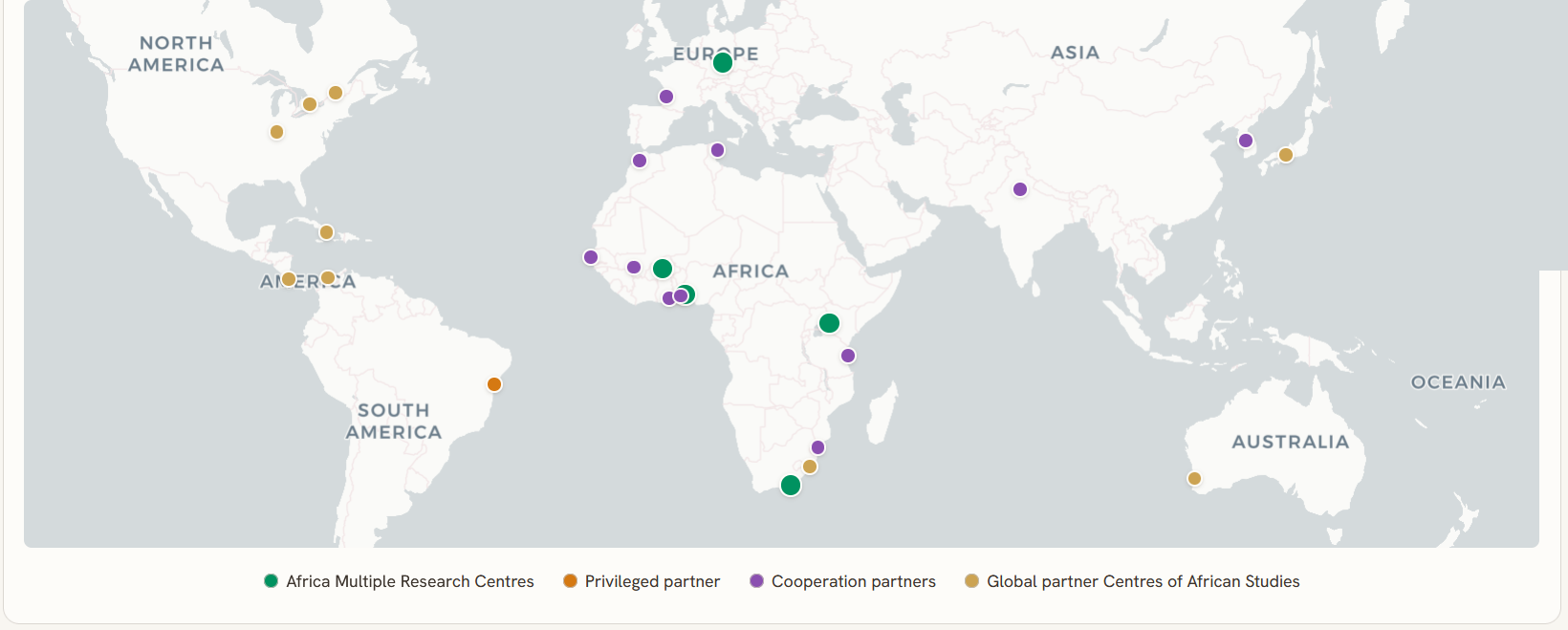
A network of five centres
AMRCs
Université Joseph Ki-Zerbo (Burkina Faso)
University of Bayreuth (Germany)
Moi University (Kenya)
University of Lagos (Nigeria)
Rhodes University (South Africa)
Shown in green on the map. africamultiple…/centres
Slide 4
Digital Research Environment (DRE) — the cluster's digital infrastructure unit
We build the cluster's data infrastructure
Four areas of work — one goal: research data that is findable, reusable and presentable .
Data management & curation
Metadata and ontologies, Wikidata reconciliation, African-language taxonomies, DOIs and archiving.
Data science & methods
Text mining, NLP, network analysis, web scraping.
AI-assisted document processing
OCR, transcription, entity extraction, tagging — on local, open-source, GDPR-compliant models.
Dissemination & presentation
Dashboards, maps, network graphs, Omeka S databases, websites.
Grounded in FAIR & CARE and multiple knowledge systems. Full range: africamultiple…/digital-solutions
Slide 5
DRE · how we work
Two principles guide how we work
Description is a joint effort
Curation and description are shared with our AMRC partners. Each centre describes the data it knows best; the DRE runs the shared infrastructure that connects them.
Storage stays distributed
Data stays in its local repository; Bayreuth holds the metadata layer that points to it. Research data becomes findable without being relocated .
Distributed by design
A considered response to debates on data colonialism and extractivism : the field's material is not drawn from Africa onto a server in Germany.
Slide 6
The first phase
We began with WissKI
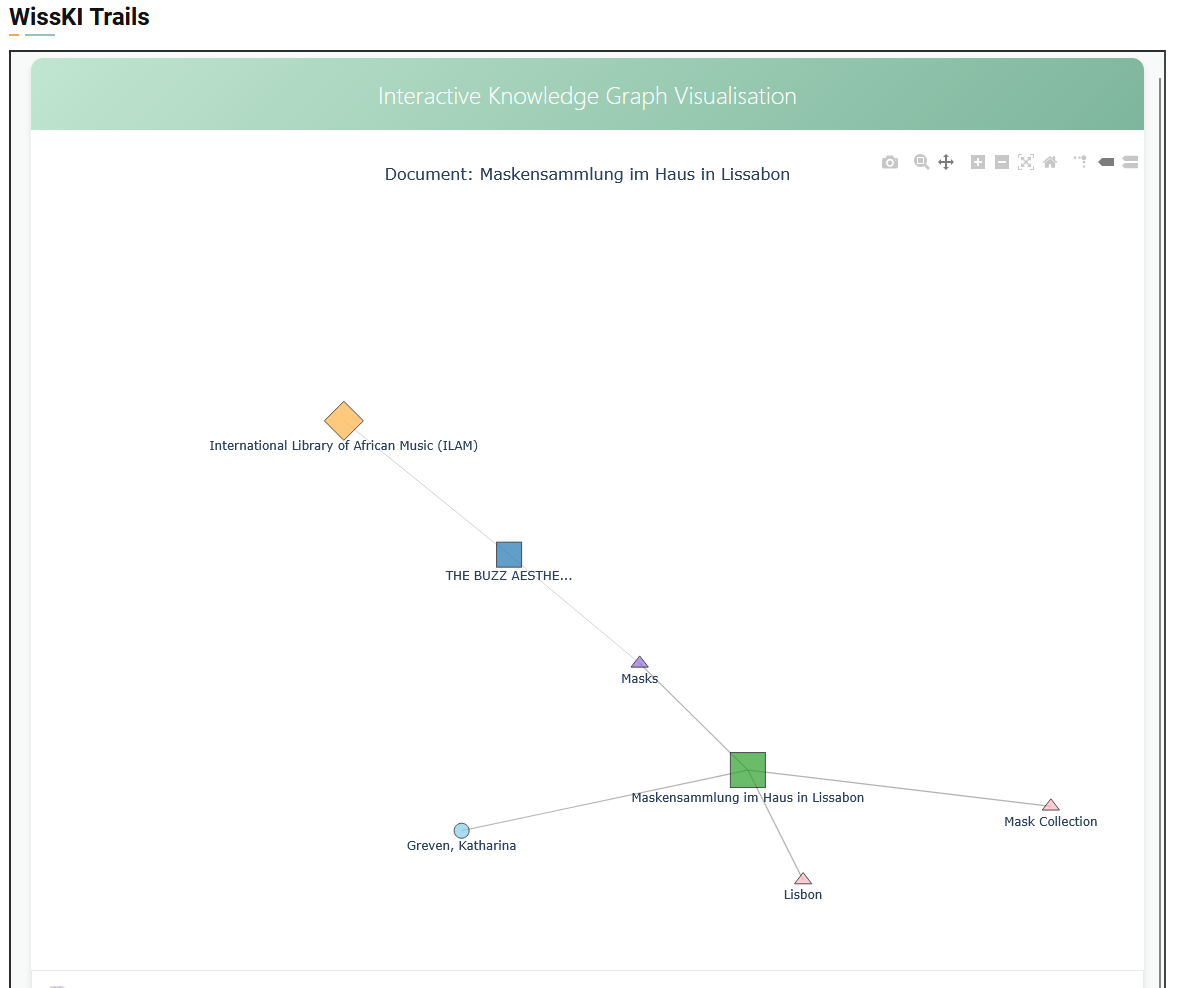
A semantic research-data system built on knowledge graphs — entities and their relations, tied to shared ontologies.
WissKI — Wissenschaftliche Kommunikationsinfrastruktur , "scientific communication infrastructure".
Searching and exploring research data across the centres.
Records as a knowledge graph: entities linked by typed relations.
Slide 7
The new platform · replacing WissKI@UBT
Enter AMIRA
The A frica M ultiple I nteractive R esearch A tlas — the Cluster's new home for its research data, publications and outputs.
Browse
Items, people, projects, publications and media — with type-ahead autocomplete and faceted filters.
Visualise
Maps, network graphs and charts across the whole collection at once.
Cross-linked
Every person, project, subject and place is its own page you can open.
Now live
Built on Omeka S
Slide 8
The atlas, live
Africa Multiple Interactive Research Atlas
Slide 9
International Library of African Music (ILAM)
A collection from Rhodes, in AMIRA
data.africamultiple.uni-bayreuth.de/s/amira/page/international-library-of-african-music-ilam
Open the collection ↗
An external collection from ILAM at Rhodes — its catalogue is described in AMIRA
Slide 10
Search & discovery
Facets, filters, autocomplete — built on Typesense
data.africamultiple.uni-bayreuth.de/s/amira/dre-search
Open search ↗
Slide 11
Built on relationality
Here an entity is the sum of its relationships , rather than a standalone record.
Relationality , one of the cluster's three concepts, treats phenomena as formed through their relationships — and attends to the worlds those relationships leave unmade or silenced .
Slide 12
Relationality, made visible
Connections, not records
data.africamultiple.uni-bayreuth.de/s/amira/item/293
Open record ↗
Open a record — here, Prof. Ute Fendler — and AMIRA lists every resource linked to it, each labelled with the nature of the connection .
71
linked resources on this record
Projects, publications, co-authors, places and subjects — each its own page, and each link naming the relationship.
Slide 13
Custom Omeka S module · built in-house
Spatial exploration
Every georeferenced place in the collection: pan, zoom, open.
data.africamultiple.uni-bayreuth.de/s/amira/page/spatial-exploration
Open the map ↗
Slide 14
Custom Omeka S module · knowledge-graph links
Entities and their links
data.africamultiple.uni-bayreuth.de/s/amira/page/networks
Open ↗
The whole collection as one network — entities such as people, projects, subjects and places, drawn together by the links recorded between them in the knowledge graph.
The catch, already visible
Every link here was described by someone — and subject description is the thinnest part of that.
Slide 15
Where it's hardest
An atlas of relations is only as strong as its weakest metadata .
The weakest part is almost always subject description — the part that researchers supply the least of all.
Slide 16
When terms do exist
Whose subject headings?
Where subject terms exist, they tend to come from Library of Congress Subject Headings.
Our pipeline matches subjects against the LCSH API
LCSH was built elsewhere, for other collections
African concepts and languages fit it poorly
Borrowed terms reshape what can be found
The vocabulary problem
Two people pick the same term for the same thing under a fifth of the time (Furnas et al., 1987). One imposed vocabulary makes that worse.
Risam (2018): standard schemas can carry epistemic violence — categories that erase as they describe.
Slide 17
Still exploratory
Building the entities the vocabulary lacks
Moving authority work to Wikidata
Open, multilingual, editable by communities rather than one national library.
Reconcile people, places, institutions to Wikidata
Create the African entities it still lacks
AI to help, not to decide
Open-source local LLMs draft candidates at scale; people review and approve.
Draft labels, definitions, links for review
Curators and centres keep the final say
Exploratory by design
To move authority over description closer to the people the data is about.
Slide 18
Thank you
Who has the authority to decide how knowledge is described, and therefore how it is found?
In an era of contested truth, this is the challenge that reimagining the archive must face.
Explore AMIRA: data.africamultiple.uni-bayreuth.de/s/amira