AI and Africa Symposium · University of Kansas · 17 September 2026
AI and the work
of the historian
Researching Islam and Muslims in West Africa.
Curating the sources through which we study them.

 These slidesslides.frederickmadore.com
Abundance has a history
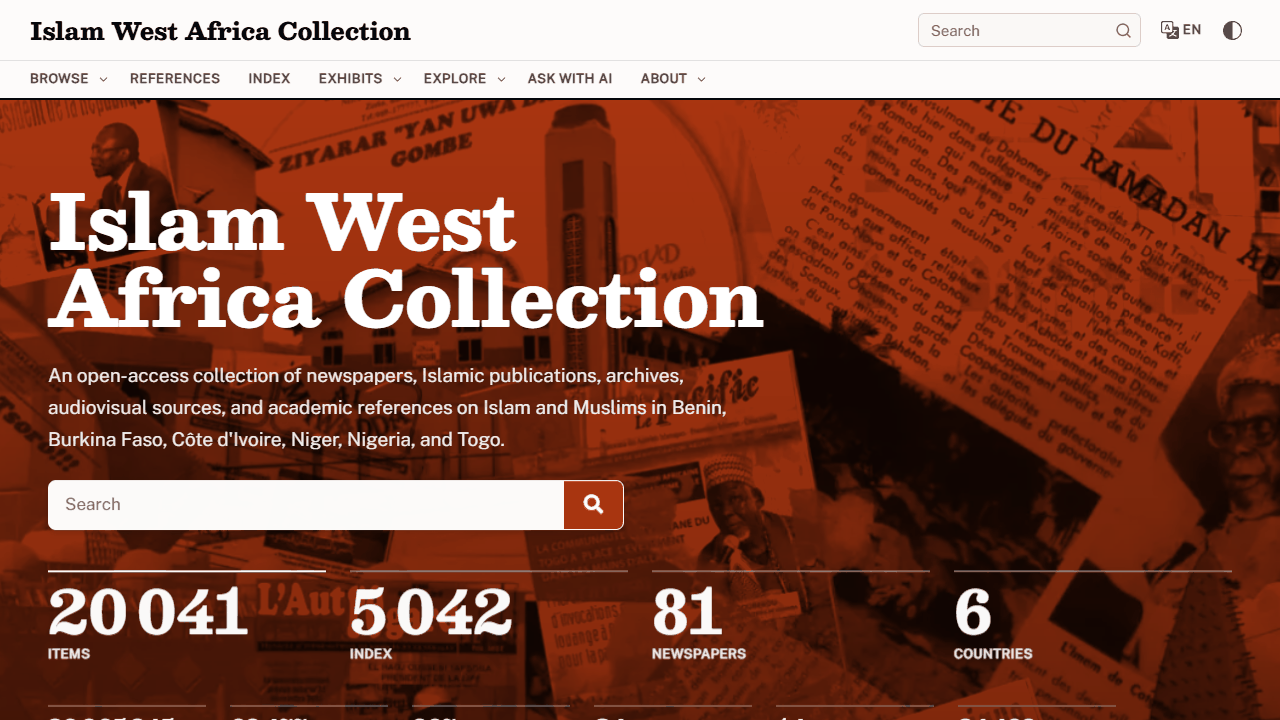
A familiar problem for historians: “scanning parties”, thousands of photographs, little time to read them.
Curation already interprets
Which spellings and uncertainties survive?
Do two names identify the same person?
Which documents and categories count?
Keep each transformation traceable to the document.
Where does the press direct our attention?
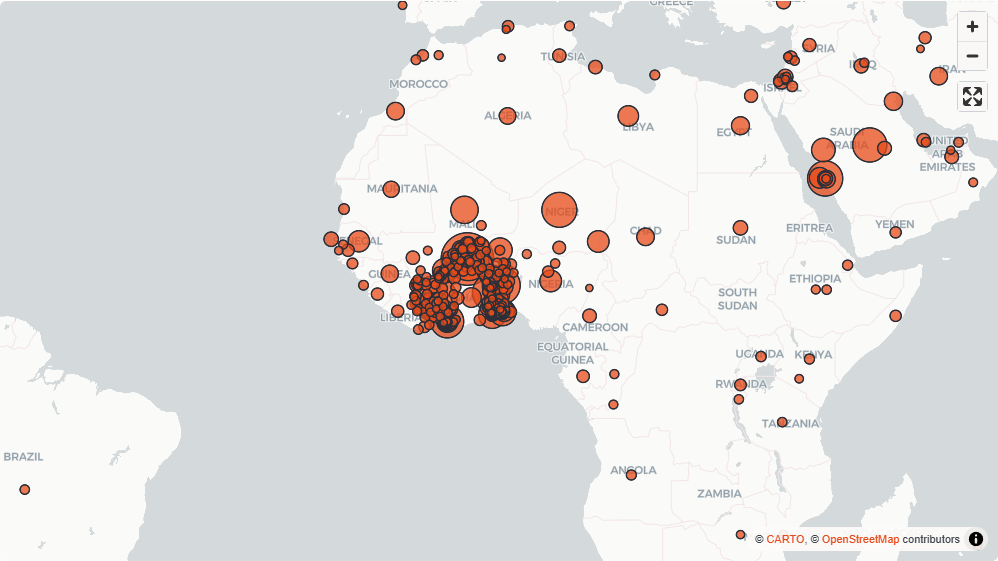
Place mentions open questions about pilgrimage, education and diplomacy.
What does a connection mean?
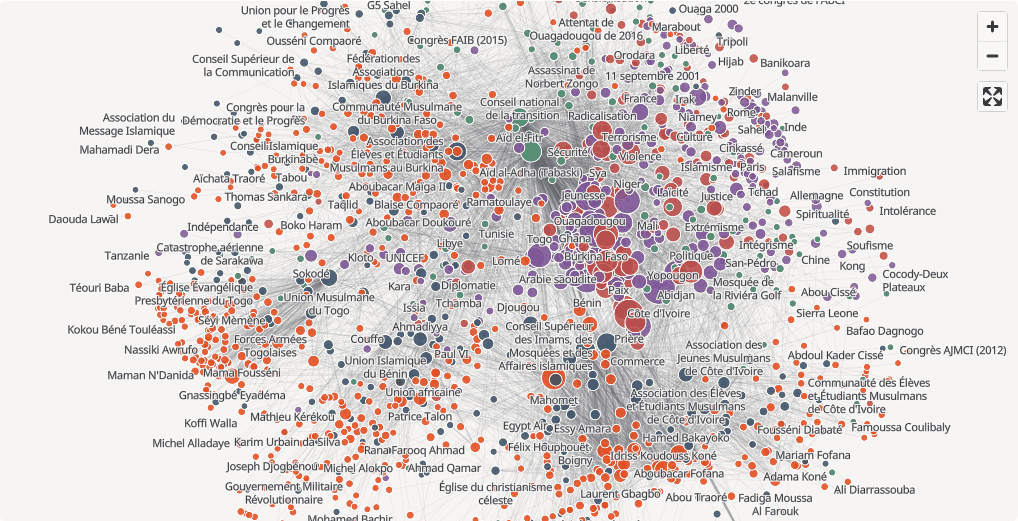
A co-mention is a starting point for investigating a relationship.
What a label leaves out
La Voie · Abobo, Côte d’Ivoire · 11 June 1994
A favourable portrayal of Muslims.
Sympathy for worshippers during police interventions at mosques.
How does that sympathy support a critique of the government?
Attribution, political purpose and the newspaper’s position.
Classification directs attention; close reading explains the intervention.
More people can build.
Who can verify?
- Describe a research need in ordinary language
- Develop interfaces around a particular collection
- Revise maps and networks through experimentation
- Check counts, filters and missing records
- Read code and recognise consequential errors
- Maintain software beyond the first prototype
Affordable access,
unequal control
Low entry costs.
Little local hardware.
External terms, connectivity, foreign-currency billing and changing services.
Greater control over processing.
Retain particular model versions.
Hardware, electricity, technical expertise and institutional support.
University computing at Bayreuth expands my options. Access elsewhere differs.
Whose sources become usable?
- LanguageFrench-language gains leave other needs unresolved.
- LabourPreservation, digitisation and review need sustained support.
- AuthorityCustodians need a say in description, access and reuse.
Make the archive searchable.
Keep its making visible.
Historical judgement belongs throughout the process.
Sources & further reading
Madore, Frédérick. “When AI Meets the Archive: Transforming the Islam West Africa Collection with Large Language Models.” Manuscript submitted to African Studies Review, version 2.
Islam West Africa Collection: Explore. Map and network captures: 11 September 2026. Visualisations retain the IWAC’s terms of use; map attribution: CARTO / OpenStreetMap contributors.
Birhane, Abeba (2020). “Algorithmic Colonization of Africa.” SCRIPTed 17 (2): 389–409.
Risam, Roopika, and Alex Gil (2022). “Introduction: The Questions of Minimal Computing.” Digital Humanities Quarterly 16 (2).
Smith, Astrid J., and Bridget Whearty (2023). “All the Work You Do Not See: Labor, Digitizers, and the Foundations of Digital Humanities.” In Debates in the Digital Humanities 2023, 27–46.