Contents
AI and Africa Symposium · University of Kansas · 17 September 2026
AI and the work
of the historian
Researching Islam and Muslims in West Africa.
Curating the sources through which we study them.

Abundance has a history
Collection items20,000+
Words in the textual corpus≈31 million
YouTube audiovisual minutes34,468
Items in my Zotero library38,142
A familiar problem for historians: “scanning parties”, thousands of photographs, little time to read them.
Reading printed Ewé
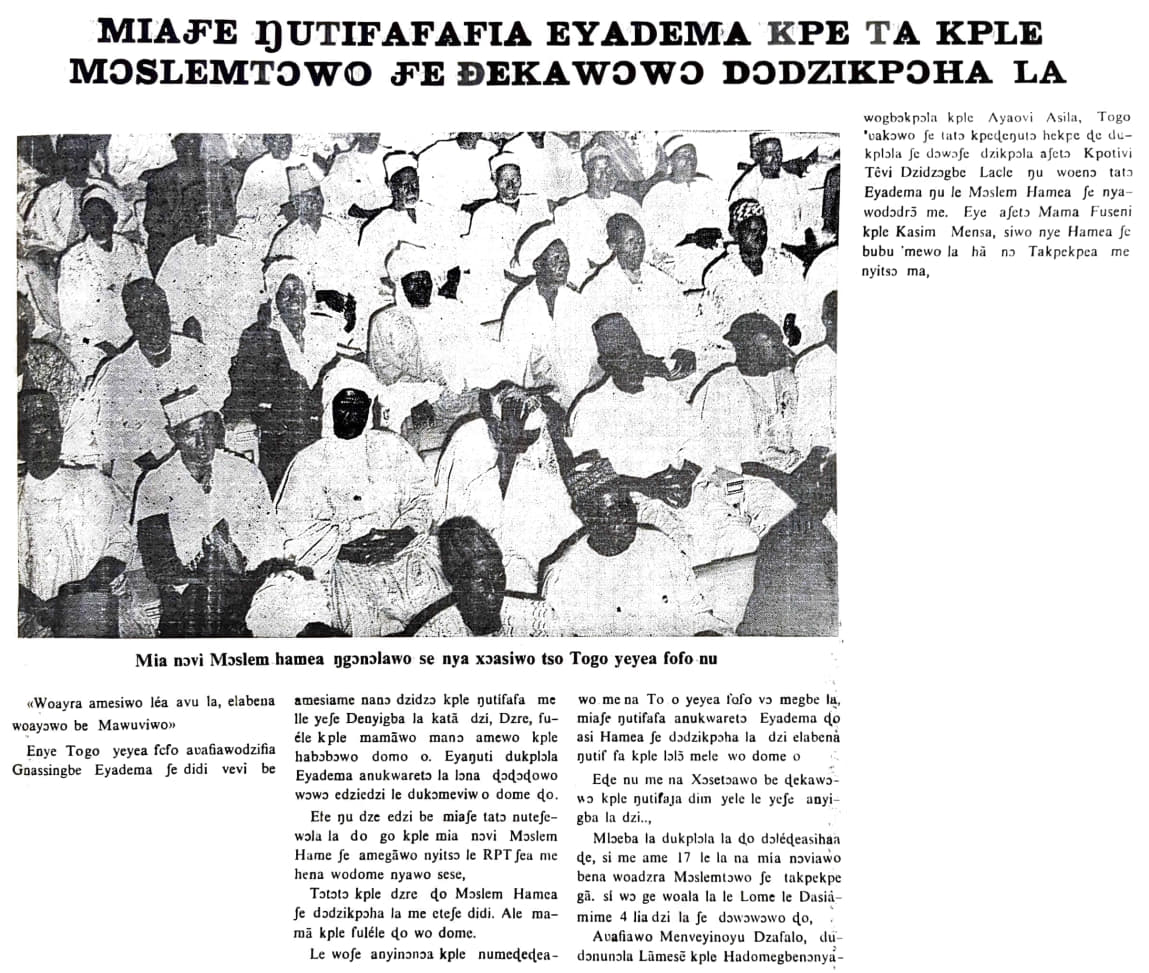
Togo Presse, 31 July 1976.
Extracted text · Ewé
MIAFE ŊUTIFAFAFIA EYADEMA KPE TA KPLE MƆSLEMTƆWO FE ƉEKAWƆWƆ DƆDZIKPƆHA LA

Mia nɔvi Mɔslem hamea ngɔnɔlawo se nya xɔasiwo tso Togo yeyea fofo nu

«Woayra amesiwo léa avu la, elabena woayɔwo be Mawuviwo»

Enye Togo yeyea fofo avafiawodzifia Gnassingbe Eyadema fe didi vevi be amesiame nanɔ dzidzɔ kple ŋutifafa me lle yefe Denyigba la katã dzi, Dzre, fuéle kple mamãwo manɔ amewo kple habɔbɔwo domo o. Eyaŋuti dukplɔla Eyadema anukwaretɔ la lɔna ɖɔɖɔɖowo wɔwɔ edziedzi le dukɔmeviwo dome ɖo.

Ete ŋu dze edzi be miafe tatɔ nutefewɔla la do go kple mia nɔvi Mɔslem Hame fe amegãwo nyitsɔ le RPT fea me hena wodome nyawo sese,

Tototɔ kple dzre ɖo Mɔslem Hamea fe dɔdzikpɔha la me etefe didi. Ale mamã kple fuléle ɖo wo dome.

Le wofe anyinɔnɔa kple numeɖeɖeawo me na To o yeyea fofo vɔ megbe la, miafe ŋutifafa anukwaretɔ Eyadema ɖo asi Hamea fe dɔdzikpɔha la dzi elabenà ŋutif fa kple lɔlɔ̃ mele wo dome o

Eɖe nu me na Xɔsetɔawo be ɖekawɔwɔ kple ŋutifafa dim yele le yefe anyigba la dzi..,

Mlɔeba la dukplɔla la ɖo dɔléɖeasihaa ɖe, si me ame 17 le la na mia nɔviawo bena woadzra Mɔslemtɔwo fe takpekpe gã. si wɔ ge woala la le Lome le Dasiãmime 4 lia dzi la fe dɔwɔwɔwo ɖo,

Avafiawo Menveyinoyu Dzafalo, dũdɔnunɔla Lãmesẽ kple Hadomegbɛnɔnya-wogbɔkpɔla kple Ayaovi Asila, Togo tuakɔwo fe tatɔ kpeɖeŋutɔ hekpe ɖe dukplɔla fe dɔwɔfe dzikpɔla afɛtɔ Kpotivi Têvi Dzidzagbe Lacle ŋu woenɔ tatɔ Eyadema ŋu le Mɔslem Hamea fe nyawodɔdrɔ̃ me. Eye afɛtɔ Mama Fuseni kple Kasim Mensa, siwo nye Hamea fe bubu 'mewo la hã nɔ Takpekpea me nyitsɔ ma,Where do the sources direct our attention?
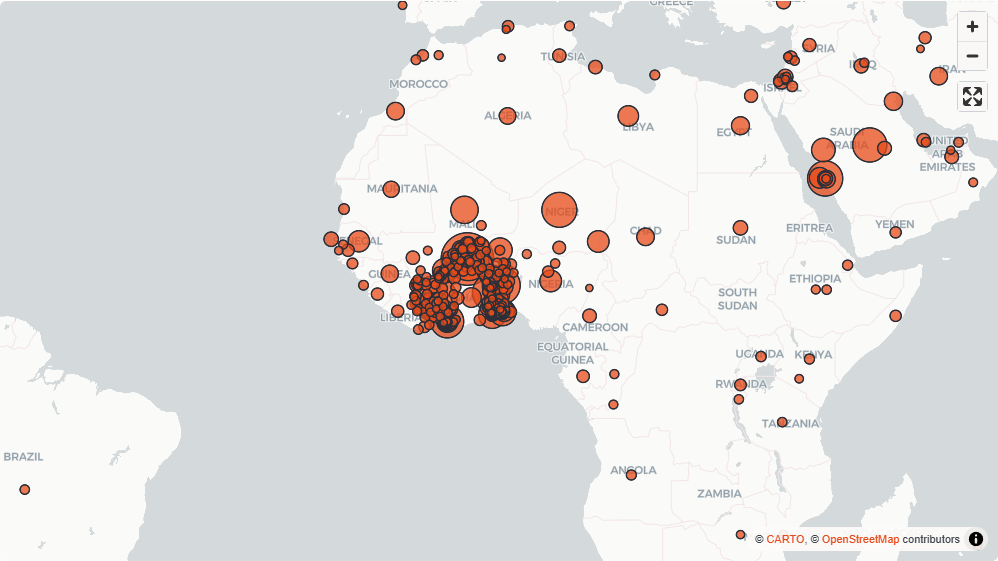
Explore the places most frequently mentioned in the IWAC—and the documents that mention them.
What does a connection mean?
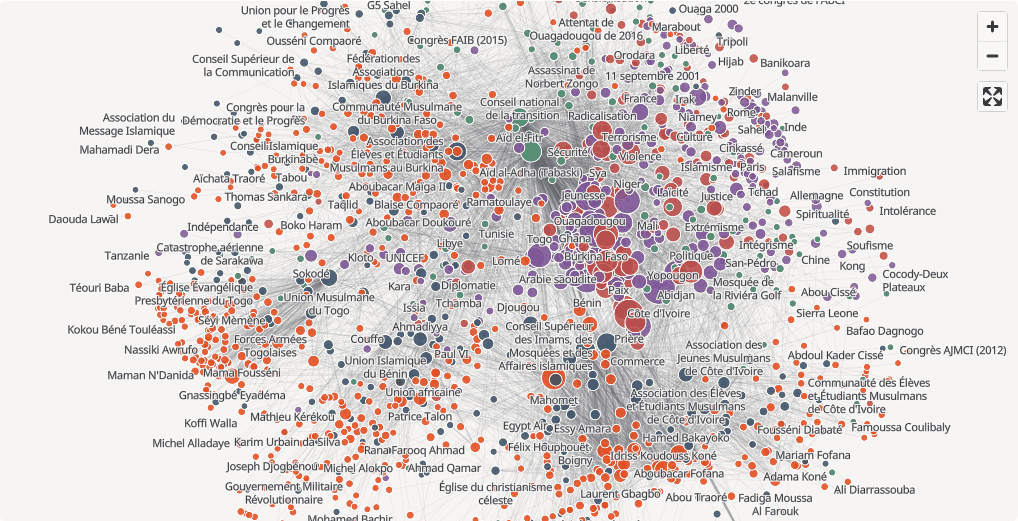
A co-mention is a starting point for investigating a relationship.
What should I read next?
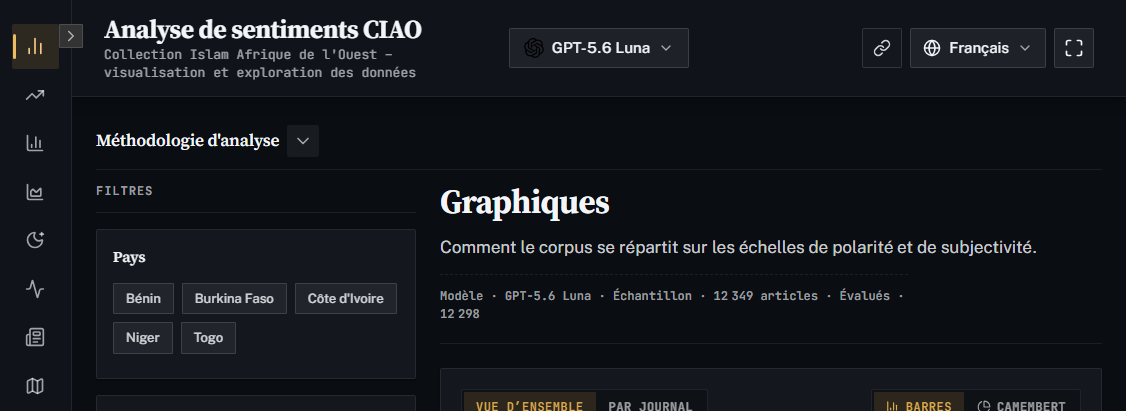
AI-assisted sentiment analysis · 12,349 newspaper articles